Belonging & Motivation
Why gifted children need someone to think with
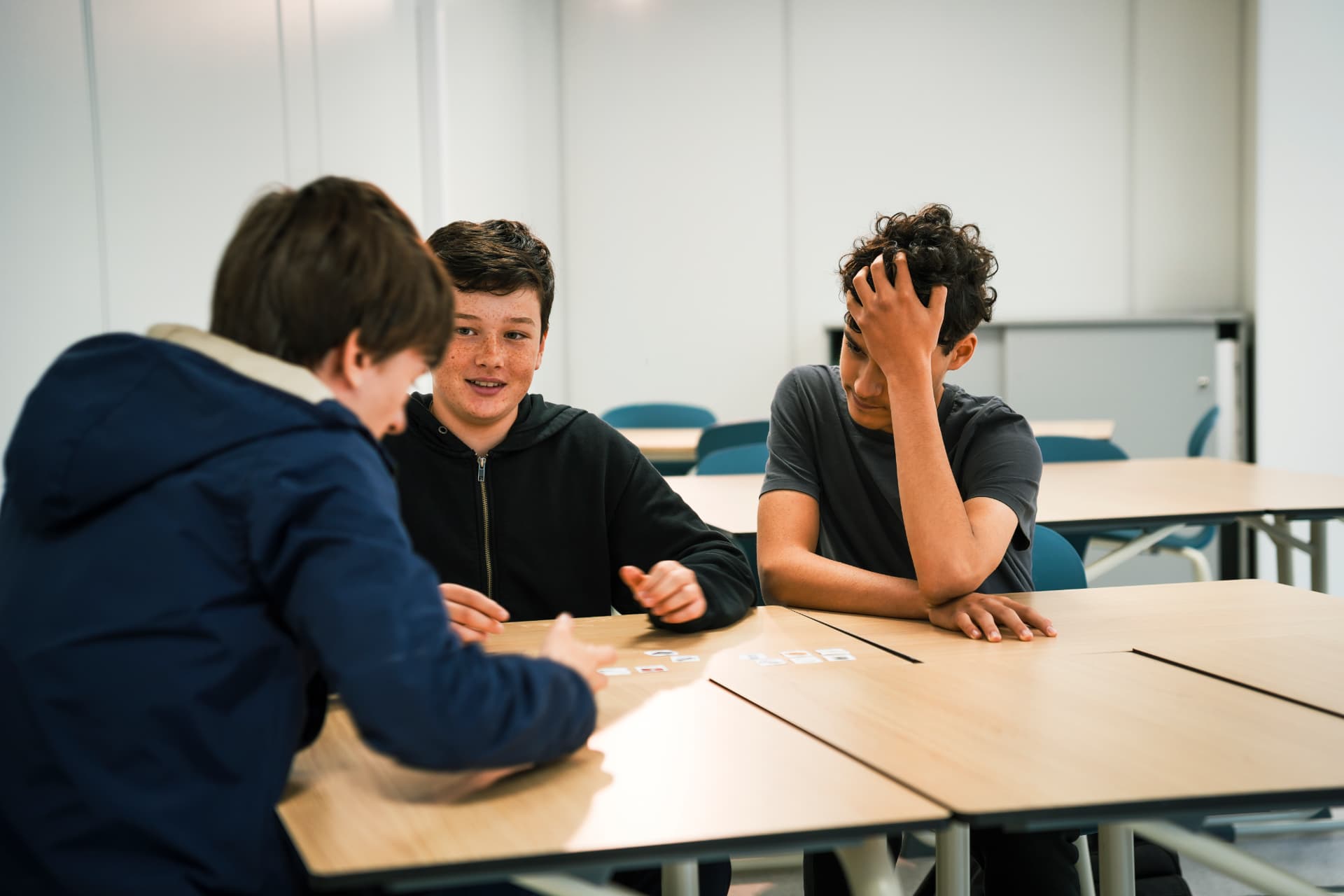
Friends at break, but who shares their curiosity?
Consider a gifted student who enjoys football at break and has friends to sit with at lunch. In science, they want to discuss whether a planet could support life without sunlight. Their friends listen briefly, then change the subject. The student leaves the question for home.
There is nothing wrong with those friendships. But if this happens repeatedly, where does that child get to explore their thinking with someone equally interested?
A child can be socially included while having few opportunities for intellectual connection.
Being the helper is different from having a learning partner
In maths, the same student quickly understands a problem and is asked to help their group. They explain the method, check answers and wait.
Now imagine working with someone who suggests a different method, spots a flaw in their reasoning or asks a question they cannot immediately answer. The student has something to learn from the exchange.
Helping classmates can be valuable. Gifted learners also need opportunities to be challenged by classmates.
The National Association for Gifted Children’s 2025 position statement reports that grouping with intellectual peers generally supports positive social and academic outcomes. It identifies time with children who share interests and abilities as one way to support belonging and a healthy sense of identity.
Why a harder worksheet may not solve the problem
A teacher notices that the student needs greater challenge and provides an advanced investigation. The difficulty is appropriate, but the student works alone while classmates discuss their task together.
One need has been addressed. Another may remain unmet.
Ryan and Deci’s Self-Determination Theory identifies autonomy, competence and relatedness as basic psychological needs supporting motivation and well-being. This offers a useful lens: challenging work can support competence, while opportunities to think and learn with others can support connection.
What schools should look for
The practical question is: when does this student regularly learn alongside someone who can extend their thinking?
That might happen through flexible subject groups, an enrichment programme or a shared-interest activity across year groups. Look at the interaction: are students exchanging ideas, questioning each other and discovering something new—or is one child usually doing the explaining?
Gifted students can value a wide range of friendships. Access to intellectual peers gives them an additional experience: being part of a group where their thinking is both understood and stretched.
References
National Association for Gifted Children. (2025). Nurturing the social and emotional development of gifted children. Position statement.
Ryan, R. M., & Deci, E. L. (2000). Self-determination theory and the facilitation of intrinsic motivation, social development, and well-being. American Psychologist, 55(1), 68–78.

About the author
Lihi Engelsman is an ECHA Specialist in Gifted Education and founder of Beyond IQ and Limitless.
Explore this with us
Our free online workshop, When Gifted Students Find Their People, will explore how to recognise this need, its relationship with motivation, and practical ways schools can create opportunities for connection.
When Gifted Students Find Their People
Tuesday, 20 October 2026 · 14:30–15:00 CET
Free · Online · Recording included
The recording is sent to every registered participant.