Identification
Finding the students you might otherwise miss.
Grades tell you who is performing. They do not tell you who is capable.
A guide to inclusive identification in international schools: what evidence to gather, who to ask, and how to make sure creative thinkers and underachievers are seen.
Looking beyond traditional markers
Gifted potential comes in more than one form.
Most identification systems are built around achievement data, and achievement data rewards children who are already performing. That leaves two groups outside the frame: creative thinkers whose strengths sit beyond the academic, and underachievers whose ability is well ahead of their results.
An inclusive process reads several kinds of evidence side by side: achievement, observation, teacher and parent insight, peer nomination and creative thinking. None of them is decisive on its own. Together they describe a learner.
A multi-step process
Six things worth gathering.
Suitable for both primary and secondary settings. The order matters less than the breadth.
01
Multiple perspectives
Teachers, parents and peers complete structured nomination forms, highlighting students who show creativity, curiosity, problem-solving, empathy or leadership. Each group notices something the others cannot see.
02
Observations
Students are observed across different settings, because patterns of potential often appear in a group task or an open-ended problem rather than in a test result.
03
Academic evidence
School records, reports and, where available, standardised or IQ results give context to a learner's profile. Evidence is only ever gathered with the agreement of parents and students.
04
Creativity measures
A creativity measure surfaces strengths in imaginative and divergent thinking. This is where students who do not stand out academically often become visible.
05
Expert analysis
All of the evidence is read together, not scored in isolation, so the picture of each learner holds contradictions rather than flattening them.
06
Agreed criteria
Schools decide in advance what threshold they are working with, for example the top 2, 5 or 10 per cent, so decisions are transparent and defensible.
Why a holistic approach matters
No hidden talent should slip through the cracks.
No single measure decides a child's future
Selection is holistic. One weak data point does not close a door, and one strong one does not open it on its own.
Every group is represented
High performers, creative thinkers and underachievers whose potential is greater than their current results.
Confidence for your community
A rigorous, inclusive and transparent system that parents, teachers and inspectors can all follow.
Where to start
Identification only helps if teachers know what they are looking at.
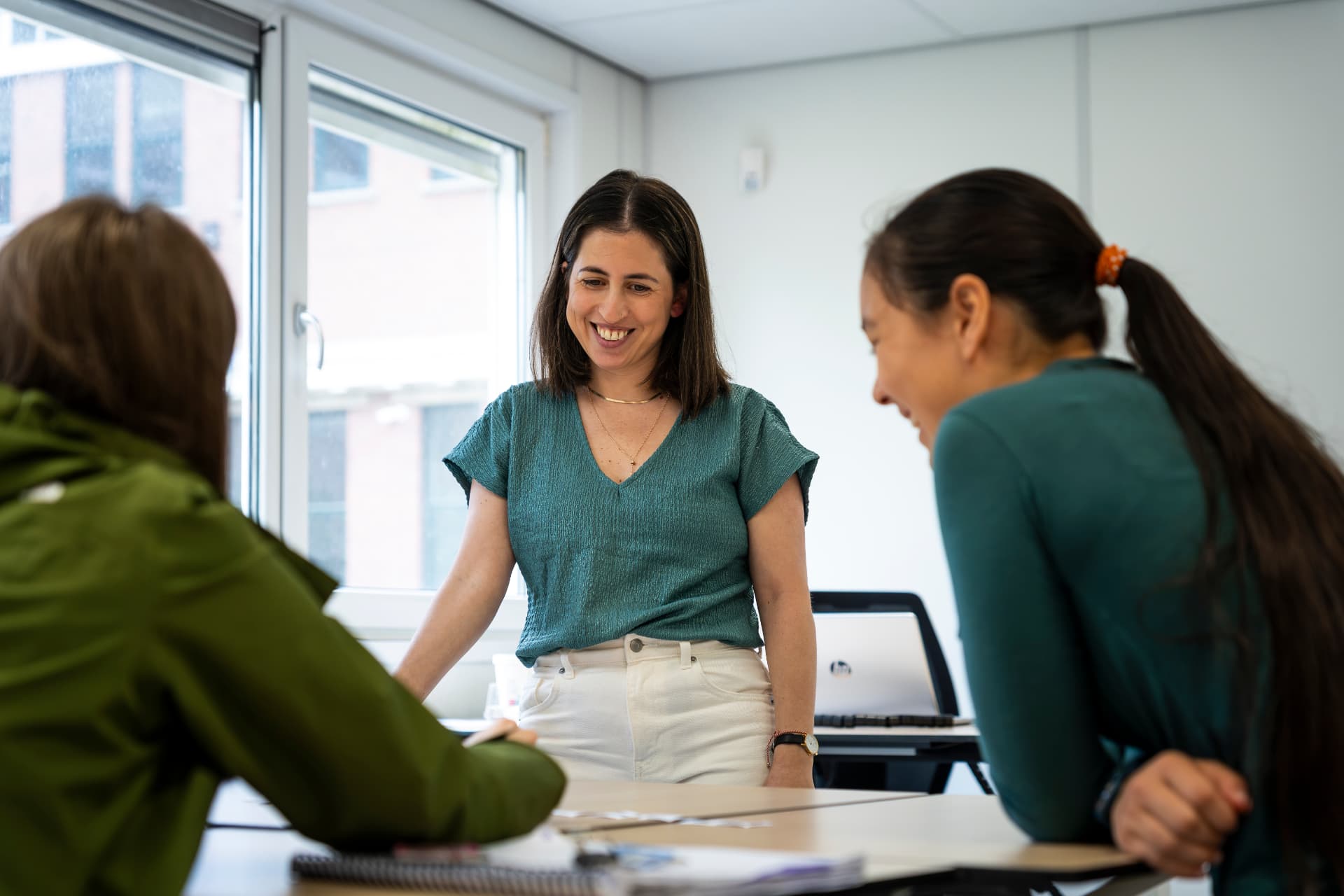
A nomination form is only as good as the understanding behind it. Most schools get further by first building shared language across the staff room, then formalising how students are identified.
Questions about identification in your school? Email info@beyond-iq.com.
Limitless
Limitless: an enrichment program for gifted children.
Beyond IQ workshops help adults understand gifted students. Limitless is the program those students take part in: ready-to-teach enrichment units for international schools, built around thinking, creativity and challenge.